
East Area
One landmark leads to the next across the eastern district.
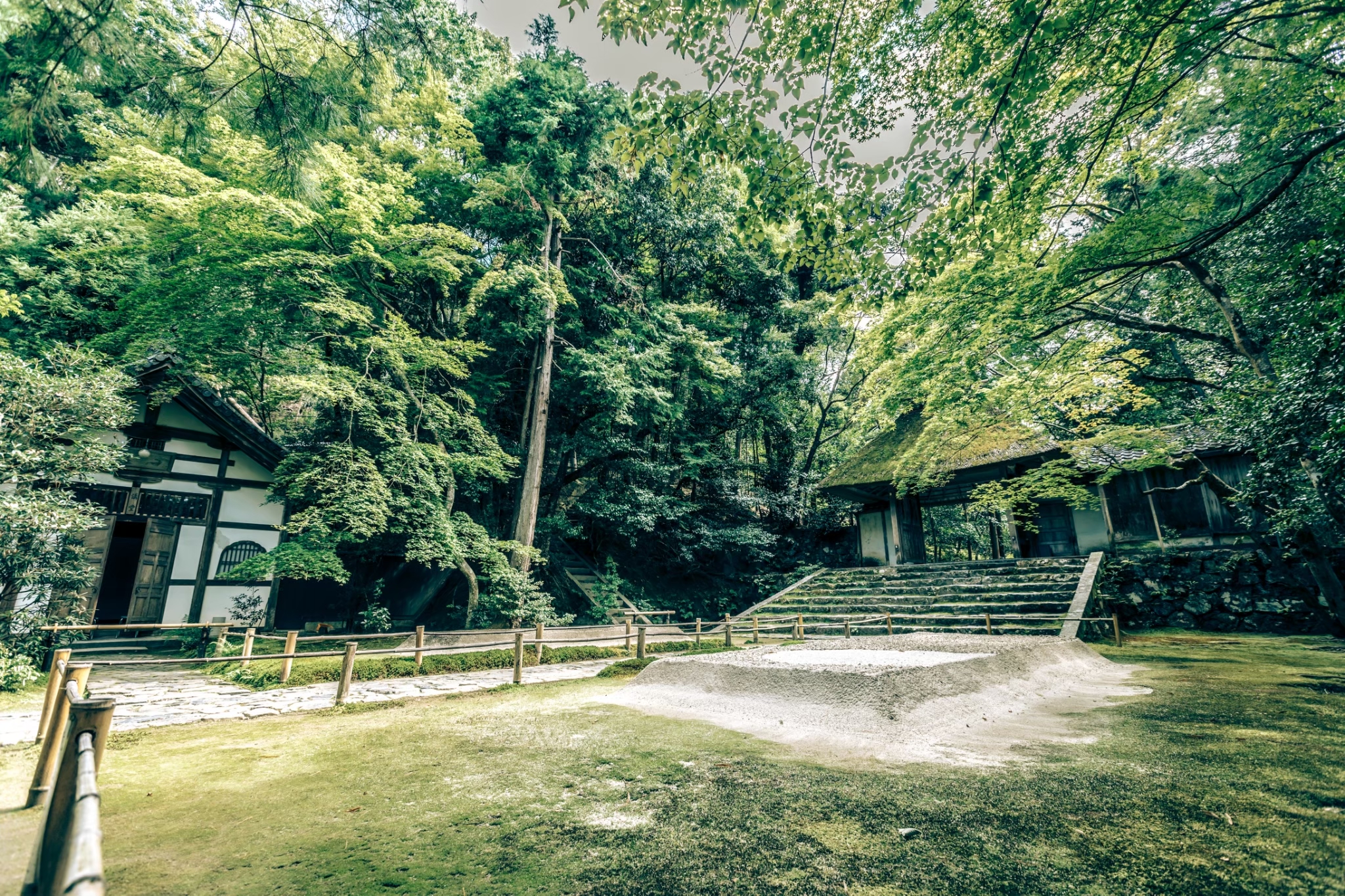
The eastern district is where the city stops and the mountains begin. The Higashiyama range runs the length of it, and the temples sit at the foot of the slope rather than on flat ground, so almost every visit involves a climb and a view back over the rooftops.
What makes the east easy to walk is that the sites are strung together. A canal path links one temple to the next, stone lanes carry you between them, and a single unhurried day can take in a Zen garden, a hillside stage and a hall of a thousand gilded figures without ever needing a train.
In this area
-
Ginkaku-ji
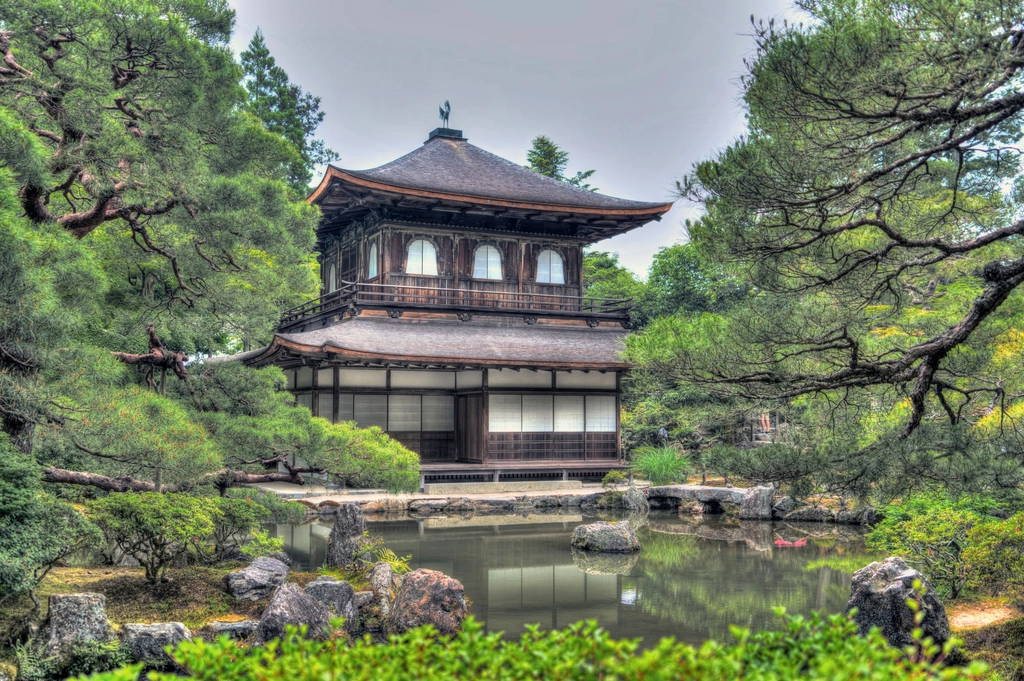
The Silver Pavilion, built in the late 1400s as a retirement villa for the shogun Ashikaga Yoshimasa and never actually clad in silver. The restraint is the point: a raked sand cone, a moss garden, and a path that climbs the hillside for a view across the city.
Ginkaku-ji
- Founded
- 1482
- Official name
- Jisho-ji
- Status
- UNESCO World Heritage
Ashikaga Yoshimasa began the Higashiyama villa in 1482 after stepping back from the shogunate, and the Kannon-den itself was still unfinished when he died in 1490. The silver foil was never applied. What stands today is close to the building as he last saw it, which is why it turns up in every explanation of wabi-sabi.
The garden is the other reason to come. Ginshadan is a wide expanse of raked sand read as the sea, and beside it Kogetsudai, a cone shaped for viewing the moon. A path climbs the hillside behind for a view over the city. Yoshimasa gathered painters and poets here, and this became the centre of Higashiyama culture: tea, ikebana, garden design, Noh.
-
The Philosopher's Path
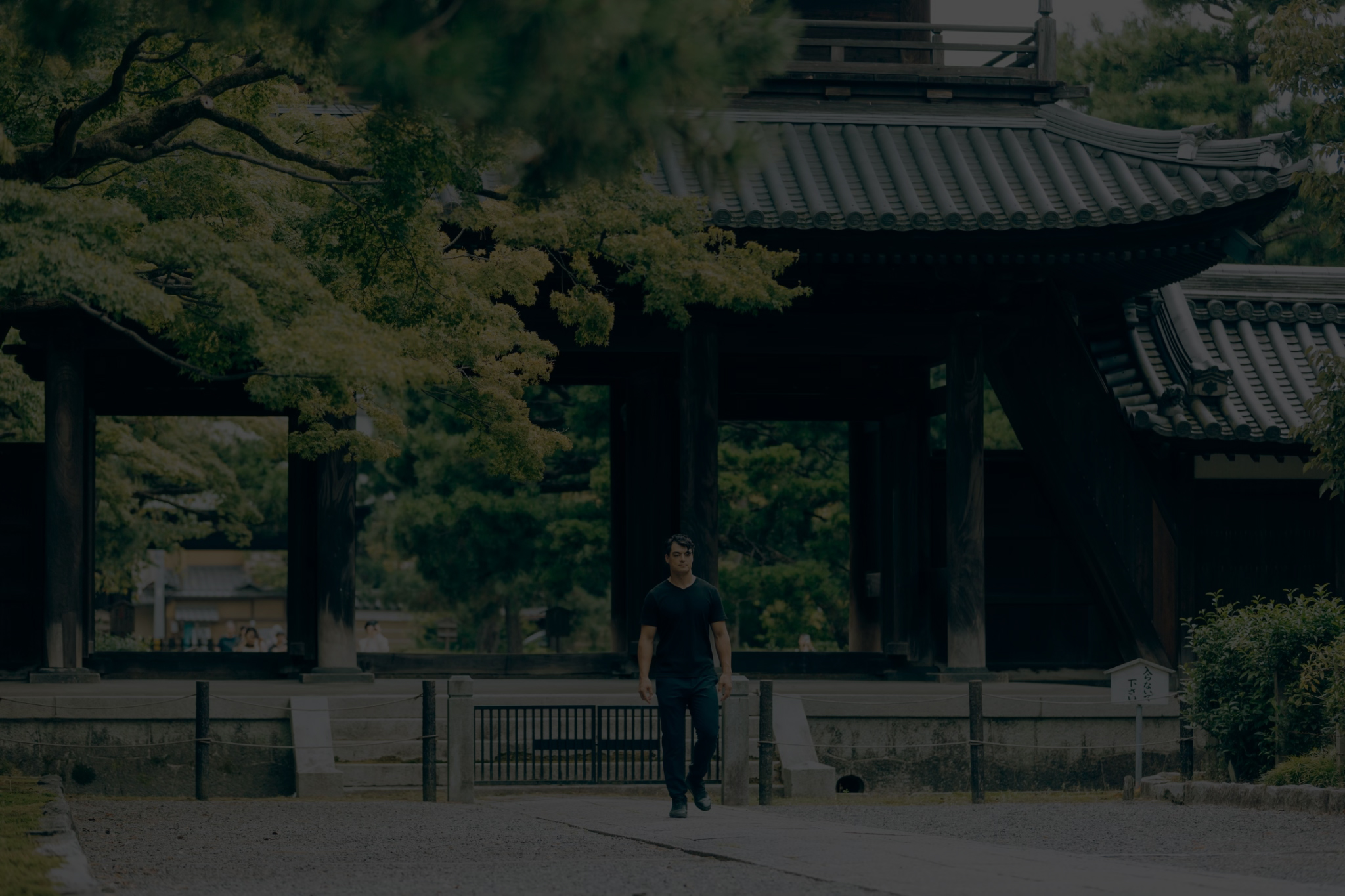
A canal-side walk of roughly two kilometres running south from Ginkaku-ji, lined with cherry trees and named for a philosopher who is said to have walked it daily. Small temples and tea houses sit just off it in either direction.
The Philosopher's Path
- Length
- About 2 km
- Named after
- Nishida Kitaro
- Cherry blossom
- Early April
The path follows a channel of the Lake Biwa Canal for roughly two kilometres, running south from Ginkaku-ji toward Nanzen-ji. It takes its name from Nishida Kitaro of the Kyoto School, said to have walked it daily on his way to the university.
Cherry trees line most of its length, which makes early April both the finest and the most crowded time to walk it. Out of season it is quiet, and the interest shifts to what sits just off the path: small temples in either direction, a scattering of cafes and craft shops, and the brick aqueduct at Nanzen-ji at the southern end.
-
Kiyomizu-dera
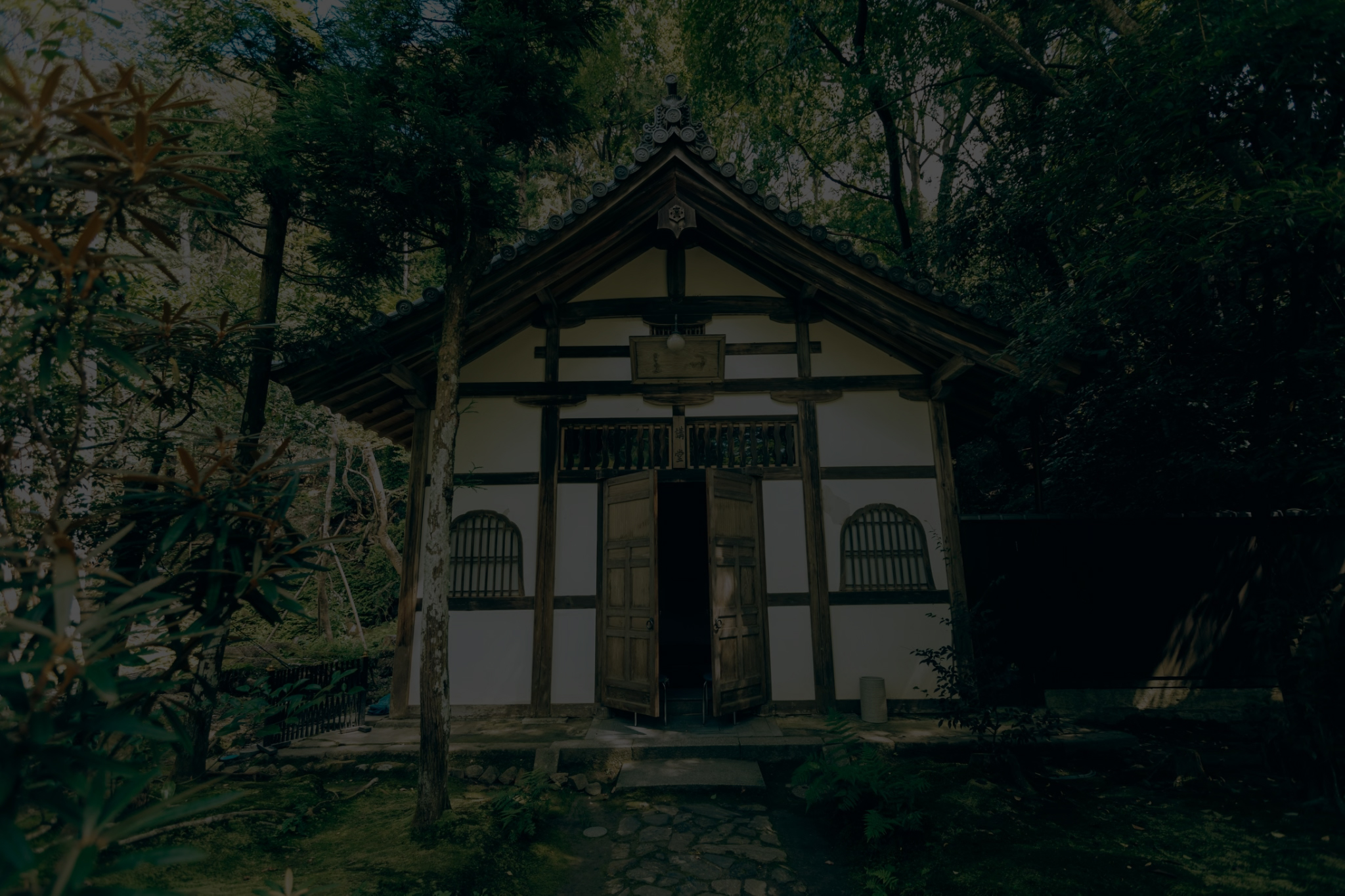
A UNESCO World Heritage Site best known for its wooden stage projecting out over the hillside, built without nails. The approach climbs through the old streets of Higashiyama, which are worth as much time as the temple itself.
Kiyomizu-dera
- Founded
- 778
- Stage rebuilt
- 1630s
- Status
- UNESCO World Heritage
The temple is older than the city around it, founded in 778, before the capital moved to Kyoto. Its main hall projects out over the slope on a lattice of keyaki pillars joined without nails; the structure standing now dates from a rebuilding under the Tokugawa in the 1630s.
Below the stage, three channels of the Otowa waterfall are caught in long-handled cups. The approach deserves as much time as the temple: the stepped lanes of Sannenzaka and Ninenzaka climb toward the gate between wooden shopfronts, and are best walked before the coaches arrive.
-
Sanjusangendo
A long, low hall holding one thousand and one statues of Kannon, carved by hand and arranged in ranks that recede further than the eye can follow. Photography is not permitted inside, which tends to make people stay longer.
Sanjusangendo
- Founded
- 1164
- Hall length
- About 120 m
- Statues
- 1,001
Officially Rengeo-in, the hall was built in 1164 for the retired emperor Go-Shirakawa and rebuilt in 1266 after fire took the original. At around 120 metres it is the longest wooden building in Japan. The name counts the thirty-three bays between its pillars, a number tied to the thirty-three forms in which Kannon is said to appear.
Inside, a thousand life-size Kannon in cypress and gold leaf stand in ranks either side of a large seated figure carved by Tankei. Twenty-eight guardian deities and the gods of wind and thunder occupy the front row. Photography is not permitted, which tends to keep people looking rather than framing.
Planning a visit to the east area? Tell us what you would like to see.
Inquire