
Other Area
Leave the city behind for the hills and villages beyond.
Everything here is outside the city, and that is the point. An hour in almost any direction from Kyoto puts you in satoyama country — terraced fields, thatched roofs, temples with no queue at the gate — and the pace changes immediately.
These are half-day and full-day trips rather than stops on a walking route, and they suit anyone who has already seen the famous sites and wants to know what the rest of the region looks like.
In this area
-
Ohara
A farming village in a valley an hour north of the city. Sanzen-in's moss gardens are the reason most people come; the roadside shops selling shiso and pickles are the reason a lot of them stay longer than planned.
Ohara

- Getting there
- About 1 hour by bus
- Temples
- Sanzen-in and four others
- Peak colour
- Mid November
A farming valley an hour north of the city. Sanzen-in anchors it, a Tendai monzeki temple whose Ojo Gokuraku-in hall goes back to 985, set among moss gardens where small jizo figures sit half-buried in the green.
Hosen-in nearby frames its garden between pillars like a picture and has a ceiling made from floorboards of Fushimi Castle. Jakko-in is where Kenreimon-in withdrew after the fall of the Taira. The lane between them is lined with shops selling shiso pickles from the fields behind; Ohara supplies a good share of Kyoto's tsukemono.
-
Takao
A mountain valley northwest of the city with three temples spread along it, reached by steps down to the river and back up the other side. One of the first places in the region to turn colour in autumn.
Takao
- Temples
- Jingo-ji, Saimyo-ji, Kozan-ji
- From the city
- About 1 hour
- Colour from
- Late October
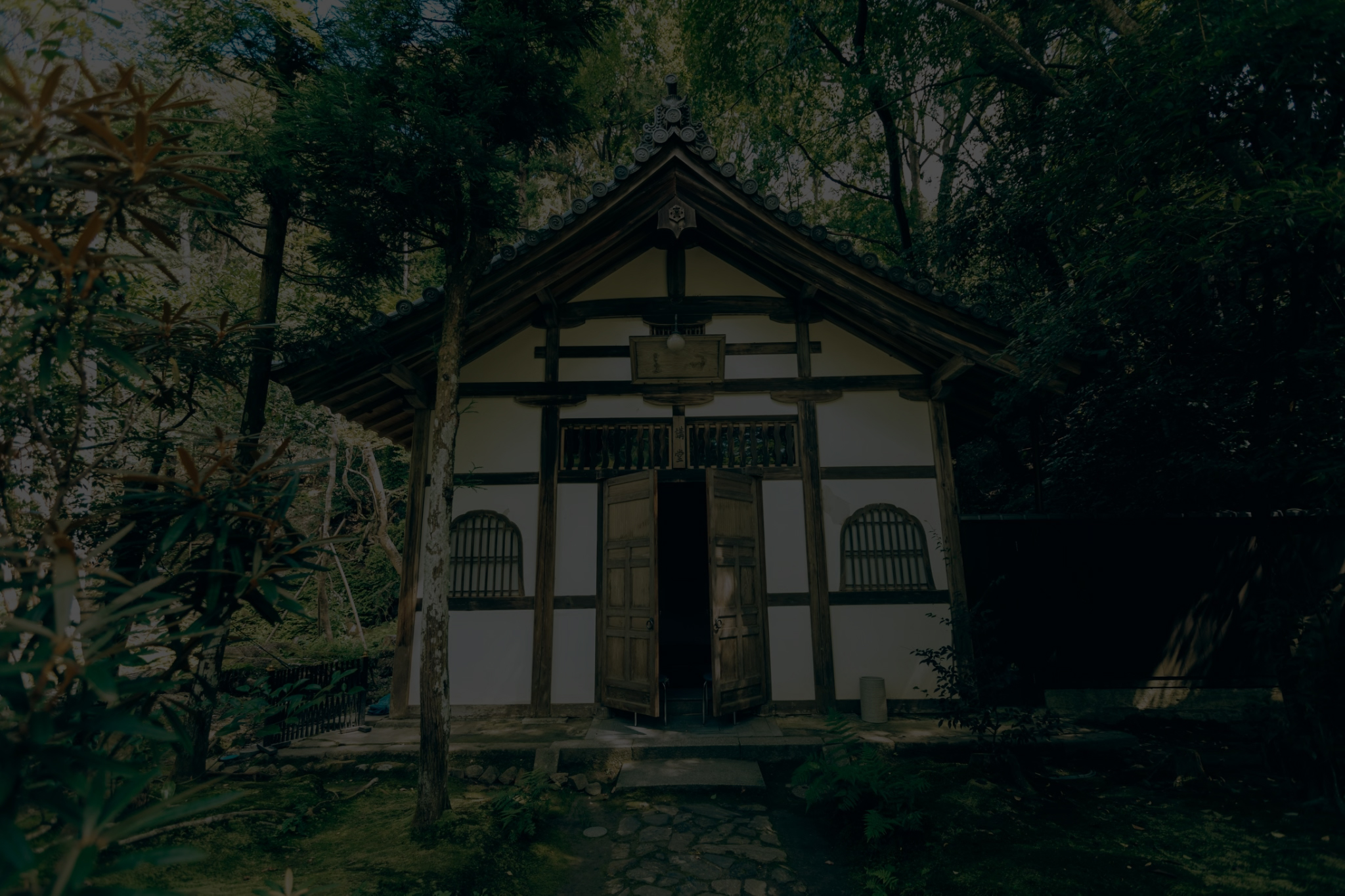
A mountain valley northwest of the city where three temples sit along the Kiyotaki river. Jingo-ji stands at the top of a long flight of steps; Kozan-ji holds the Choju Jinbutsu Giga, the scroll of frolicking animals often called the earliest ancestor of manga.
Reaching each one means going down to the river and back up the other side, which keeps the numbers well below the city temples. Takao also turns colour earlier than central Kyoto, from late October. From the terrace at Jingo-ji visitors throw small clay discs out over the gorge, a tradition worth the climb on its own.
-
Miyama
A village of thatched farmhouses in the mountains of central Kyoto prefecture, still lived in rather than preserved as a museum. Reaching it takes real effort by public transport, which keeps it as it is.
Miyama
- Thatched houses
- 38
- From Kyoto
- About 2 hours
- Winter
- Evening snow lighting
In the mountains of Nantan, north of the city, Kayabuki no Sato is a hamlet of thirty-eight thatched farmhouses, protected as a preservation district and still lived in rather than staged. The roofs are rethatched on a rotation by people who do it for a living.
There is a small folk museum, an indigo workshop or two, a couple of places to eat, and very little else, which is the point. Public transport takes the better part of two hours each way. Winter, when the roofs are under snow and lit in the evenings, is the striking time to come.
-
The northern coast
Kyoto prefecture reaches all the way to the Sea of Japan, where a pine-covered sandbar crosses the bay at Amanohashidate and boat houses line the water at Ine. Little of it resembles the Kyoto people arrive expecting.
The northern coast
- From Kyoto
- About 2 hours
- Sandbar
- 3.6 km, 8,000 pines
- Boat houses at Ine
- Over 200
Kyoto prefecture reaches all the way to the Sea of Japan. At Amanohashidate a pine-covered sandbar 3.6 kilometres long crosses Miyazu Bay, counted among the three great views of Japan and traditionally looked at upside down: bend forward, peer back between your legs, and it appears to hang in the sky.
North of there, at Ine, more than two hundred funaya line the water, boat garages at the waterline with living quarters above, so the village looks as though it is floating. The best view of them is from a boat. Some take overnight guests, though rooms are hard to come by.
Planning a visit to the other area? Tell us what you would like to see.
Inquire