
West Area
Western Kyoto, long known for the beauty of its landscape.
The west was where the court came to escape the city, and it still reads that way. Arashiyama sits against the river with mountains behind it, and the villas that once belonged to aristocrats have largely become temples and gardens open to anyone who walks in.
It is also where Kyoto keeps two of its most-studied gardens: one designed to borrow the mountain behind it, the other consisting of nothing but fifteen stones and raked gravel. Seeing both in a single afternoon is a useful lesson in how much range the form has.
In this area
-
Tenryu-ji
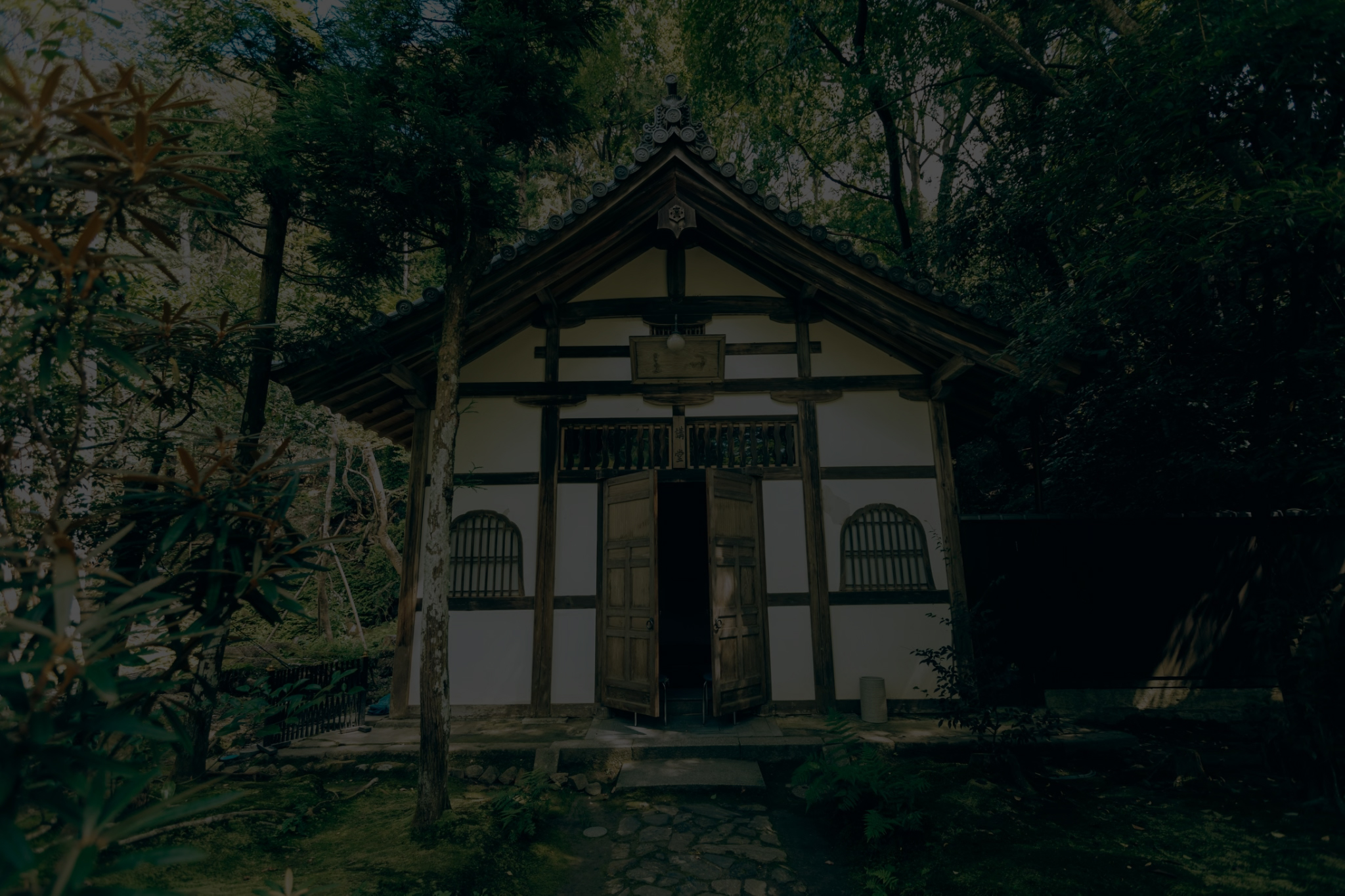
A UNESCO World Heritage Site and the head temple of its Zen school. Its pond garden, laid out by the monk Muso Soseki in the 1300s, survives in close to its original form and uses the mountains behind it as part of the composition.
Tenryu-ji
- Founded
- 1339
- Garden by
- Muso Soseki
- Rank
- First of the Five Mountains
Founded in 1339 by Ashikaga Takauji to settle the spirit of Emperor Go-Daigo, once his ally and later his enemy, with the Zen master Muso Soseki installed as founding abbot. It was ranked first among Kyoto's five great Zen temples and holds that position still.
The buildings burned repeatedly and most of what stands is from the Meiji period, but the Sogenchi garden survives close to its original form, a pond garden that takes the Arashiyama and Kameyama slopes into its composition. It was the first place in Japan designated both a historic site and a place of scenic beauty. The cloud dragon on the Dharma Hall ceiling is worth the separate ticket.
-
The bamboo grove
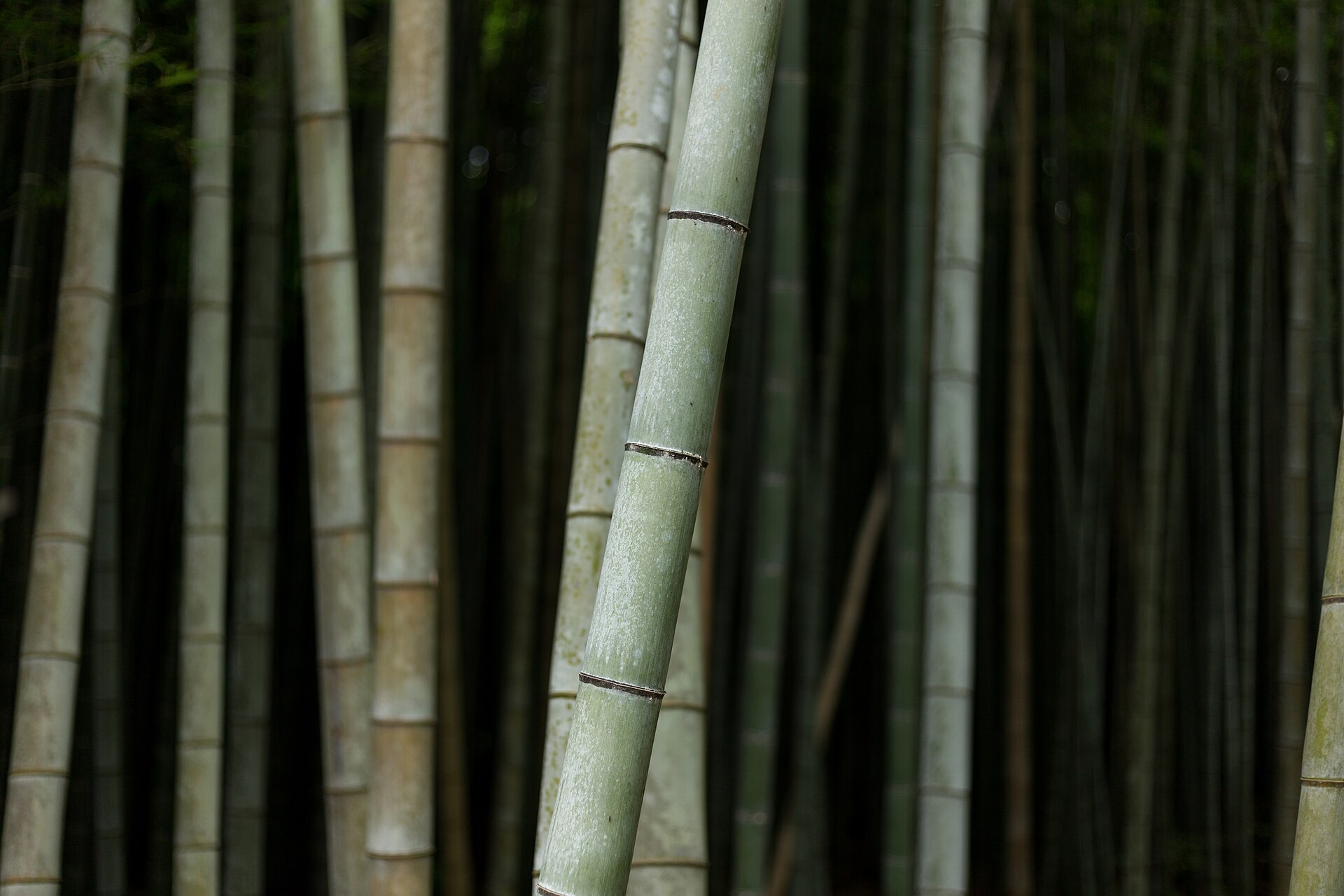
The path behind Tenryu-ji runs through bamboo tall enough to close over the top of it. It is a short walk and an extremely popular one — go at first light, or accept that you will be sharing it.
The bamboo grove
- Best time
- Before 8 am
- Length
- 10 minute walk
- Admission
- Free
The grove sits behind Tenryu-ji on the path toward the Okochi Sanso villa. It is a short walk, ten minutes end to end, and the most photographed place in western Kyoto, which is precisely the difficulty.
Before eight in the morning it is quiet and the light comes through sideways between the stems. Later the path is shoulder to shoulder. Continuing to Okochi Sanso at the far end sheds most of the crowd, and admission there includes tea with a view back over the city.
-
Ryoan-ji
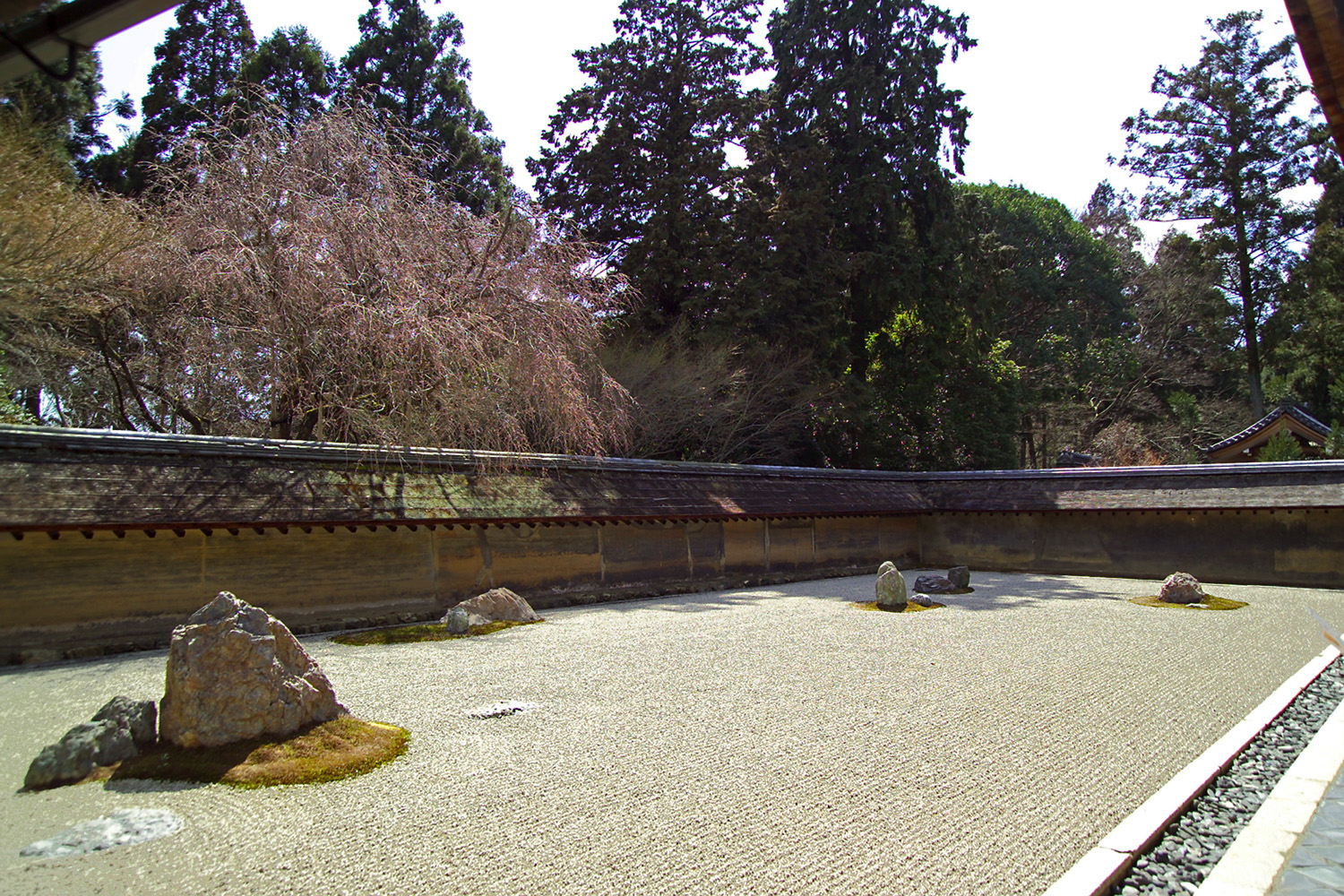
Fifteen stones set in raked gravel, arranged so that one is always hidden from any viewing position. Nobody knows for certain who designed it or what it depicts, which is a large part of why people sit in front of it for so long.
Ryoan-ji
- Laid out
- Late 1400s
- Stones
- 15, one always hidden
- Status
- UNESCO World Heritage
Fifteen stones in five groups, set in raked gravel within a low wall. From any point on the veranda one stone is always out of sight; only from above can all fifteen be seen at once. Who designed it, and what if anything it represents, is not known.
People have argued about this garden for five centuries, which is much of its appeal, and most visitors sit far longer than they intended. Behind the temple the pond garden and its moss are older than the rock garden and almost always emptier.
-
Togetsukyo and the river
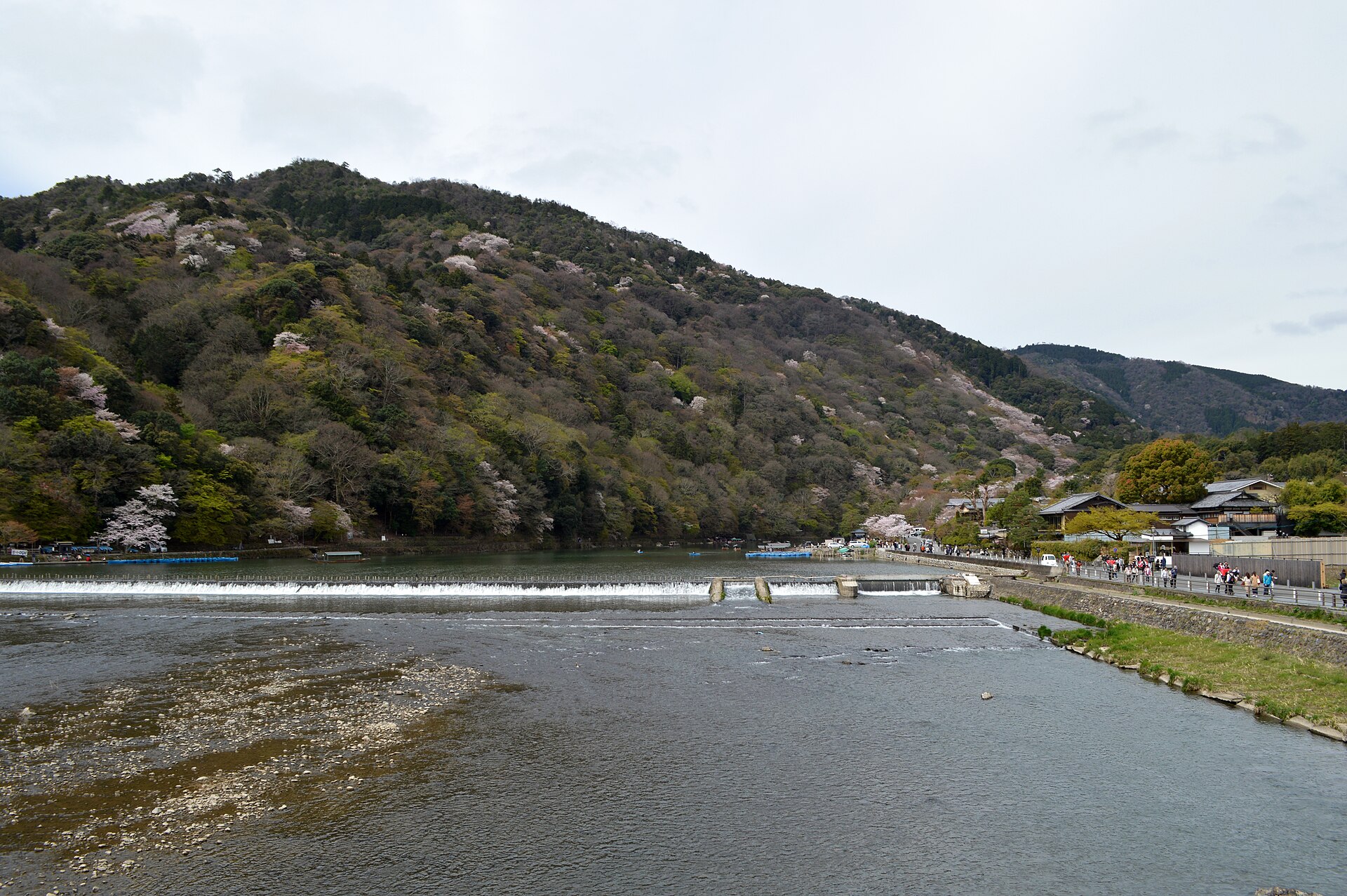
The bridge across the Katsura has stood in some form for over a thousand years. Boats still work the water upstream of it, and the walk along the bank is the quietest part of Arashiyama.
Togetsukyo and the river
- Name means
- Moon crossing bridge
- River
- The Katsura
- Boats
- Hire by the hour
A bridge has crossed the Katsura here in some form for more than a thousand years. The present one dates from the 1930s but keeps its wooden appearance. The name, moon crossing bridge, is attributed to an emperor's remark about the moon seeming to walk across it.
Upstream the valley narrows and boats can be hired by the hour. The far bank is the quietest part of Arashiyama at any time of day, and the path toward the Hozu gorge leaves the shops behind within a few minutes.
Planning a visit to the west area? Tell us what you would like to see.
Inquire